How to Choose a Scissor Lift Table for Warehouse and Production: A Detailed Guide
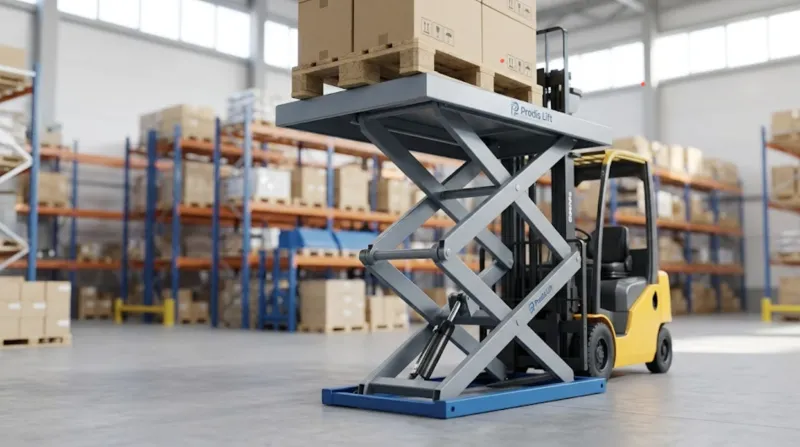
Optimizing intra-shop logistics and warehouse processes is impossible without reliable lifting equipment. Forklifts excel at horizontal movement, but when it comes to the regular and safe lifting of heavy pallets to a height, a hydraulic scissor lift table is the best solution. This stationary equipment saves space, does not require registration with regulatory authorities, and reduces the risk of dropped loads to zero.
However, there are no one-size-fits-all solutions in this field. Ordering a lift "blindly" or with excessive specifications leads to unjustified financial costs, while buying a model that is too weak results in rapid hydraulic failure. The engineers at the Ukrainian manufacturing plant PRODIS LIFT LLC have prepared a detailed guide to help you choose the optimal equipment configuration for your specific business needs.
Evaluating Basic Parameters: Load Capacity and Platform Dimensions
The selection always begins with an analysis of the load. The first rule: the load capacity of the mechanism must be calculated with a margin of at least 20-30% of your maximum working load. This will protect the hydraulic cylinders from extreme wear during constant operation.
The size of the cargo platform (tabletop) is dictated by the dimensions of your goods. If you work with standard Euro pallets, a compact platform of 1.5 m² is sufficient. But if your production facility manufactures pipes, rolled metal, long boards, or sandwich panels, a standard table will not work due to the risk of tipping. Tandem lift tables are designed for such tasks. In these systems, two synchronized scissor mechanisms are arranged in a row, allowing the tabletop length to be increased up to 12 meters. The width can vary from 800 to 3000 mm, and the total load capacity of such a tandem system reaches a phenomenal 40,000 kg (40 tons), ensuring an absolutely level lift without tilting.
Working Height: From Low-Profile Systems to High-Lift Platforms
The second critical factor is the height difference that needs to be overcome. Depending on the architecture of your warehouse or production line, the lifting height can vary from a few tens of centimeters to several floors.
If you need to lift cargo to the level of a mezzanine or the second/third floor of a warehouse, double-scissor cargo lifts or high-lift platforms are used. By installing several lever mechanisms on top of each other, this equipment can safely lift weights up to 10,000 kg to an impressive height of up to 12 meters. The movement speed remains comfortable and adjustable (from 0.1 to 0.5 m/s), taking from 20 to 120 seconds for a full operating cycle.

A completely opposite task is working in conditions where it is impossible or prohibited to make a concrete pit in the floor. Low-profile lift tables are created for such cases. In the folded state, their height is only from 85 mm with a maximum extension of up to 1500 mm and a load capacity of up to 2 tons. The U-shaped modification is particularly popular in small warehouses. The unique shape of the tabletop allows the operator to roll a pallet directly into the table using a standard manual pallet jack right from the floor level, without the use of additional access ramps.
Specific Tasks: Dock Equipment and Roller Conveyors
If a lift is needed not inside the workshop, but outside for unloading commercial vehicles, you should choose specialized dock lifting platforms. They are designed taking into account the aggressive impact of the environment, coated with reinforced anti-corrosion compounds, and withstand dynamic impacts when stackers drive onto them. Dock models from PRODIS LIFT lift up to 10 tons to a height of up to 2000 mm, ensuring smooth docking with the bodies of any trucks.
For modern automated factories, where human involvement is kept to a minimum, the standard smooth tabletop is replaced with a conveyor. Freight elevators with roller conveyors easily integrate into the enterprise's overall conveyor belt, automatically receiving boxes or parts, changing their height, and sending them further along the production cycle.

Safety and Hydraulics Requirements
Cutting corners on safety systems when working with multi-ton loads is unacceptable. When choosing an equipment supplier, be sure to check the technical specification for built-in safety systems.
A high-quality industrial scissor-type table must have the following elements:
-
Hose burst valves (high-pressure hoses) that block the platform from falling in the event of an oil line rupture.
-
A safety frame around the entire perimeter of the tabletop, which instantly stops the descent if foreign objects or the operator's feet come into contact with it.
-
Mechanical service stops for safely conducting maintenance in the raised position.
-
High-quality structural steel (with a thickness corresponding to the loads) and a non-slip coating on the upper platform.
-
Intelligent overload protection and a lock against unauthorized access to the control panel.
Why You Should Order a Lift Table from a Ukrainian Manufacturer
Buying off-the-shelf Chinese equipment from intermediaries often turns into problems during warranty repairs or the inability to find the necessary spare parts. By choosing a direct manufacturer — the PRODIS LIFT LLC plant, you get equipment designed individually for your business dimensions.
We have been manufacturing hydraulic tables from high-strength steel for 12 years, using reliable hydraulics designed for long-term, leak-free operation. Our team provides the full cycle: from 3D design to delivery, installation, and commissioning anywhere in Ukraine. Contact our engineers for a consultation, and we will help you choose the configuration that perfectly solves the logistics tasks of your enterprise without unnecessary overpayments.